What is Flexible Diagnostic Bronchoscopy?
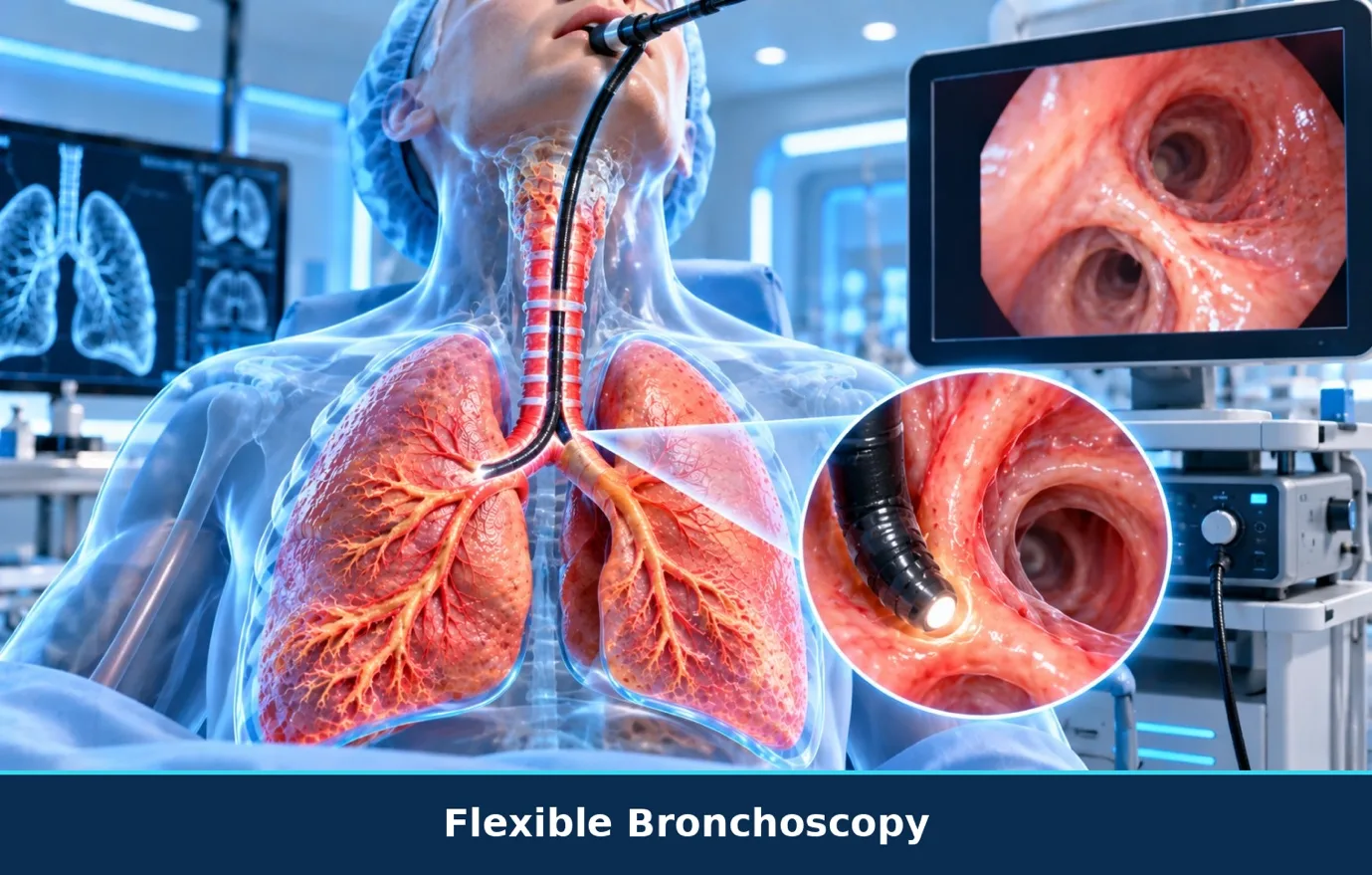
Flexible bronchoscopy uses a thin, flexible tube with a camera at its tip, passed through the nose or mouth into the windpipe and the airways of the lungs. It lets the pulmonologist see the airways directly and collect samples for laboratory tests, usually as a day-care procedure under local anaesthesia and light sedation.
Why it is done
- Investigating abnormal shadows on chest X-ray or CT scan
- Persistent cough or coughing up blood
- Suspected tuberculosis when sputum tests are negative
- Non-resolving pneumonia
- Evaluation of suspected lung cancer or airway narrowing
Before the procedure
- Fasting for about 6 hours before the procedure (you will be given exact instructions)
- Inform the team about blood thinners, diabetes medicines and allergies — some medicines may need to be paused
- Blood tests and recent imaging (CT scan) are usually reviewed beforehand
- Bring a family member or friend to accompany you home
During the procedure
- A local anaesthetic spray numbs the nose and throat
- Light sedation is given to keep you comfortable
- Oxygen levels, heart rate and blood pressure are monitored continuously
- The bronchoscope is gently advanced and the airways are examined; samples are taken as needed
- The procedure usually takes around 15–30 minutes
After the procedure
- You will be observed for a short period until the sedation wears off
- Avoid eating or drinking for about 1–2 hours, until the throat numbness settles
- A mild sore throat, cough or slight blood-streaked sputum may occur briefly
- Do not drive or operate machinery for the rest of the day after sedation
- Biopsy results usually take a few days; your follow-up will be scheduled
Safety & risks
Bronchoscopy is generally a safe procedure. Possible risks include sore throat, transient fever, minor bleeding, low oxygen levels during the procedure and, rarely, pneumothorax (especially after lung biopsy). Your doctor will discuss the risks relevant to you before obtaining consent.
Preparation instructions may differ for individual patients — please follow the specific advice given at your consultation.
Frequently asked questions
Most patients receive light (conscious) sedation, so you are relaxed and comfortable. Many people remember little of the procedure.
Yes. The bronchoscope is thinner than your airway, so you breathe normally around it. Oxygen is also given throughout.