What is Spirometry?
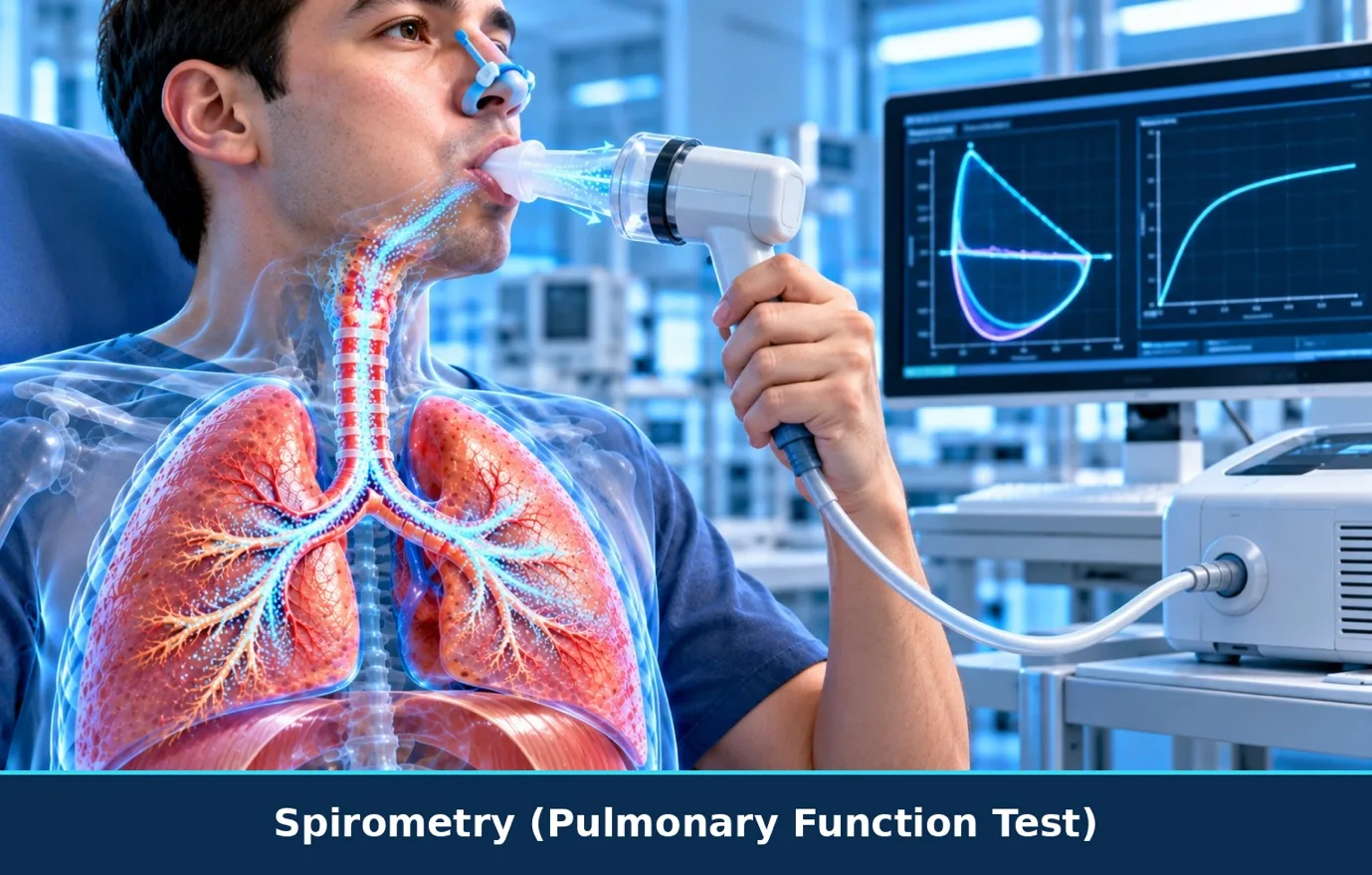
Spirometry measures the amount of air you can breathe out (forced vital capacity, FVC) and how quickly you can blow it out (forced expiratory volume in one second, FEV₁). It is essential for diagnosing and monitoring asthma, COPD and other lung conditions.
Why it is done
- Breathlessness, cough or wheeze
- Diagnosis and monitoring of asthma and COPD
- Assessment before surgery
- Monitoring of interstitial lung disease and other conditions
Before the procedure
- Avoid smoking for at least 24 hours (ideally longer) before the test
- Avoid heavy meals and vigorous exercise shortly before the test
- Wear loose, comfortable clothing
- You may be asked to withhold certain inhalers before the test — follow the instructions you are given
During the procedure
- You sit upright with a soft clip on your nose
- You take a deep breath and blow out as hard and fast as possible into a mouthpiece
- The test is repeated at least three times for accuracy
- Takes about 15–20 minutes
After the procedure
- You can resume normal activities immediately
- Results are interpreted together with your symptoms and examination
Safety & risks
Breathing tests are non-invasive and very safe. Some people feel briefly light-headed or tired from the breathing efforts. Tests may be postponed after a recent heart attack, eye or chest surgery, or if you are unwell.
Preparation instructions may differ for individual patients — please follow the specific advice given at your consultation.
Frequently asked questions
No. It requires effort, and you may feel briefly tired or light-headed, but it is not painful.