What is Diagnostic & Therapeutic Thoracentesis?
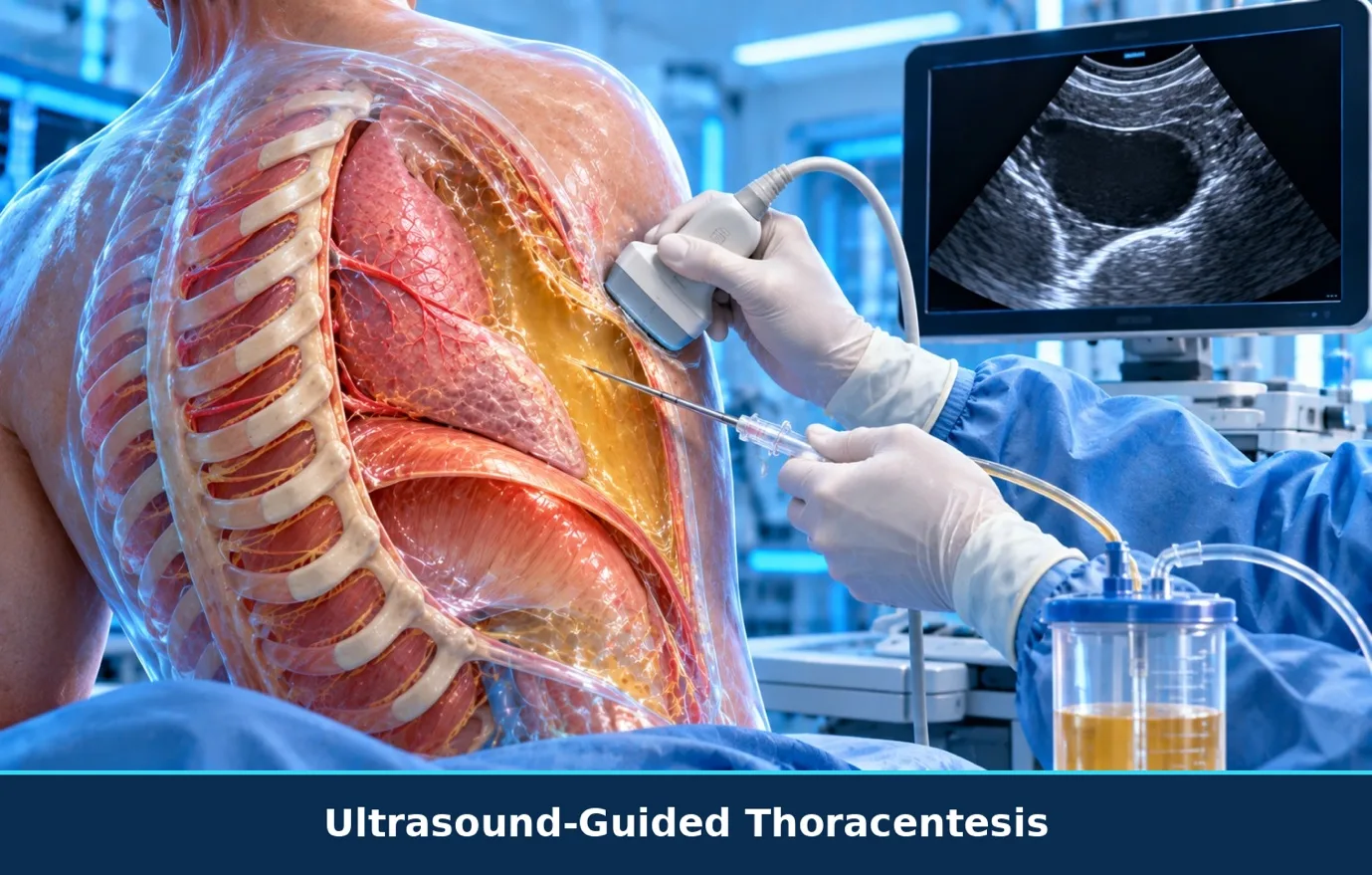
Thoracentesis (pleural tap) removes fluid from the pleural space. A small sample is sent for tests to find the cause of the effusion (diagnostic), while removal of a larger volume relieves breathlessness (therapeutic). It is performed under local anaesthesia with ultrasound guidance.
Why it is done
- New pleural effusion of unknown cause
- Breathlessness due to a large effusion
- Suspected infection of the pleural fluid
Before the procedure
- Inform the team about blood thinners and allergies
- Blood tests (including clotting profile) may be checked
- An ultrasound of the chest will be performed to locate the fluid or air safely
- You can usually eat lightly unless sedation is planned
During the procedure
- You sit upright, leaning slightly forward
- The skin is cleaned and numbed with local anaesthetic
- A needle or thin catheter is inserted under ultrasound guidance and fluid is withdrawn
After the procedure
- A dressing is applied
- You may cough as the lung re-expands — this is normal
- A chest X-ray or ultrasound may be done afterwards
Safety & risks
Pleural procedures are performed with ultrasound guidance and local anaesthesia to improve safety. Possible risks include pain, bleeding, infection, pneumothorax and, rarely, re-expansion pulmonary oedema after large-volume drainage. These will be discussed with you before the procedure.
Preparation instructions may differ for individual patients — please follow the specific advice given at your consultation.