
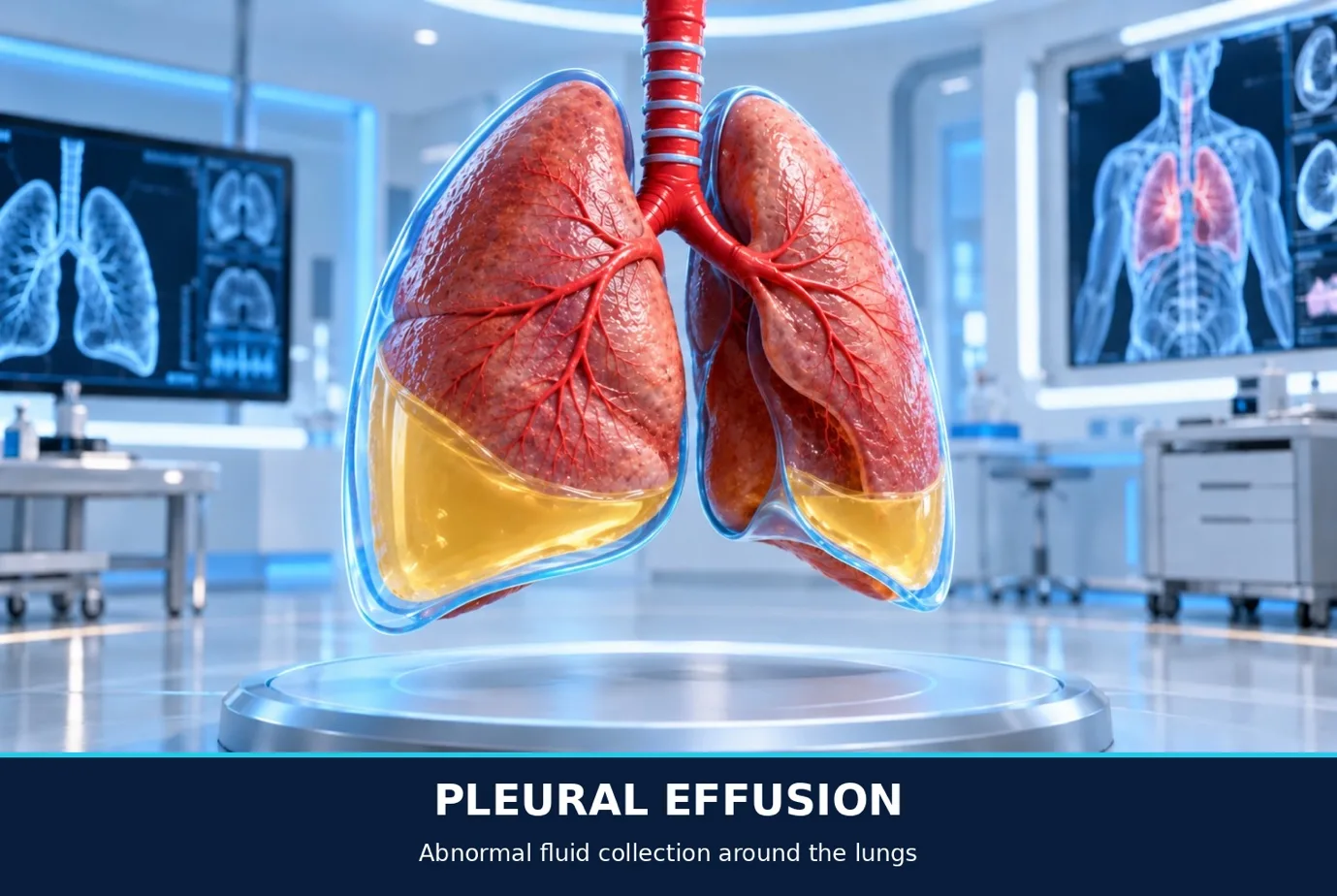
What is Pleural Effusion?
A pleural effusion is a build-up of fluid in the pleural space — the thin space between the lung and the inner chest wall. Normally there is only a small amount of fluid here, which allows the lung to move smoothly.
Pleural effusion is not a disease in itself; it is a sign of another condition such as infection, tuberculosis, heart failure, liver or kidney disease, or cancer. Identifying the cause is essential for correct treatment.
Common symptoms
- Breathlessness
- Chest pain, often worse on deep breathing
- Dry cough
- Fever if there is an infection
- Sometimes no symptoms when the effusion is small
Possible causes & risk factors
- Tuberculosis — a common cause in India
- Pneumonia (parapneumonic effusion)
- Heart failure
- Liver cirrhosis or kidney disease
- Cancer of the lung, breast or other organs, and lymphoma
- Pulmonary embolism and autoimmune diseases
When should you consult a pulmonologist?
- A pleural effusion has been seen on an X-ray or ultrasound
- Breathlessness with chest pain
- An effusion that keeps coming back after drainage
Diagnostic investigations
Your evaluation is tailored to your symptoms and history. It may include:
- Chest X-ray and thoracic ultrasound
- Diagnostic thoracentesis with pleural fluid analysis
- CT scan of the chest
- Pleural biopsy
- Medical thoracoscopy for undiagnosed effusions
Available treatment approaches
- Treatment of the underlying cause
- Therapeutic thoracentesis to relieve breathlessness
- Intercostal drainage or pigtail catheter when continued drainage is needed
- Pleurodesis for recurrent effusions in selected patients
- Indwelling pleural catheter in selected cases of recurrent malignant effusion
Treatment is individualised. The options above are general information; your doctor will recommend what is appropriate for you after assessment. Outcomes vary from person to person.
Frequently asked questions
The procedure is performed under local anaesthetic, so most patients feel only pressure or mild discomfort. Ultrasound guidance improves safety.
It depends on the cause. Once the underlying condition is treated, many effusions do not recur. Recurrent effusions may need procedures such as pleurodesis.