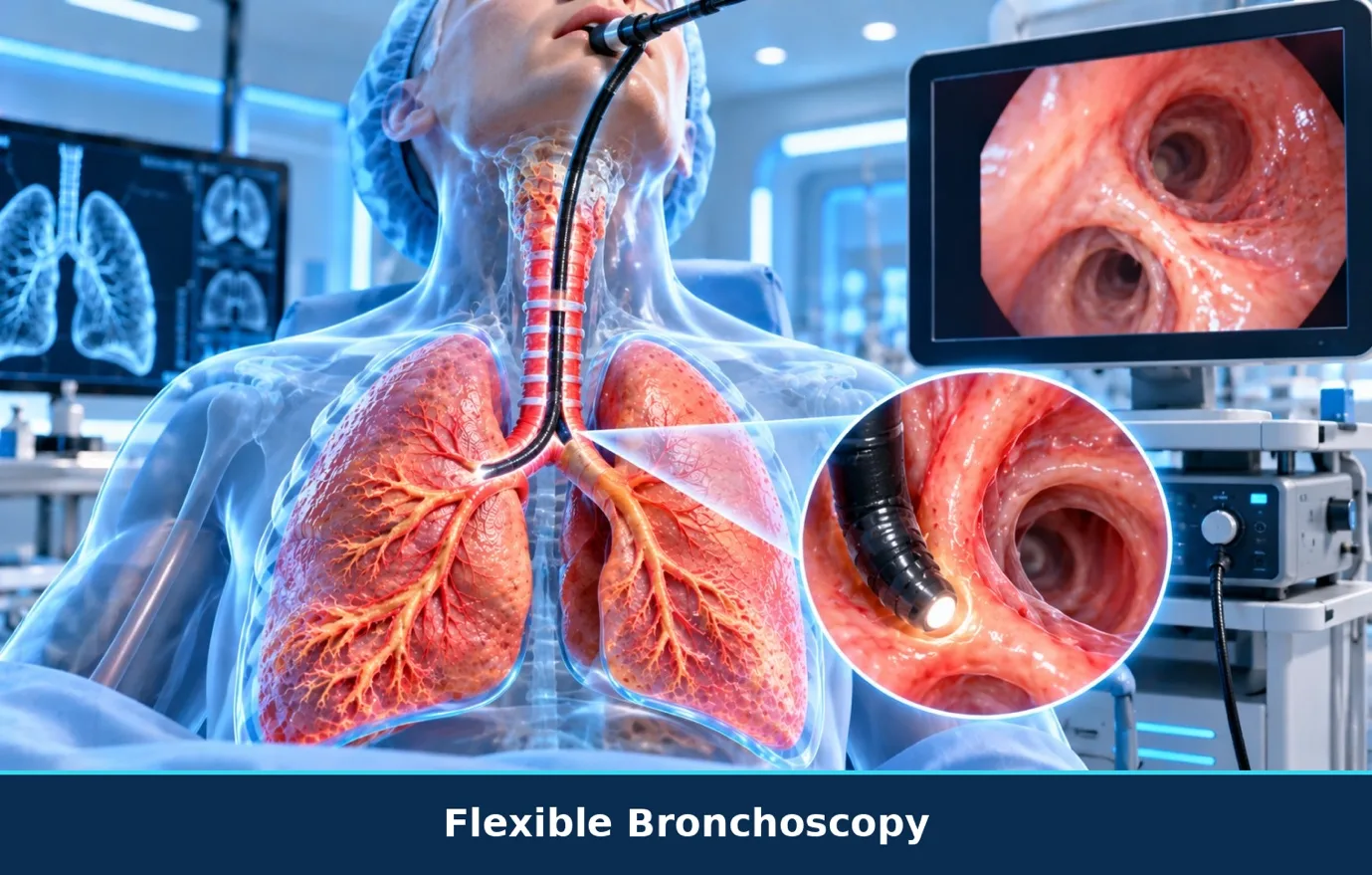
When to seek emergency care: Sudden difficulty breathing, choking or noisy breathing at rest needs emergency care.
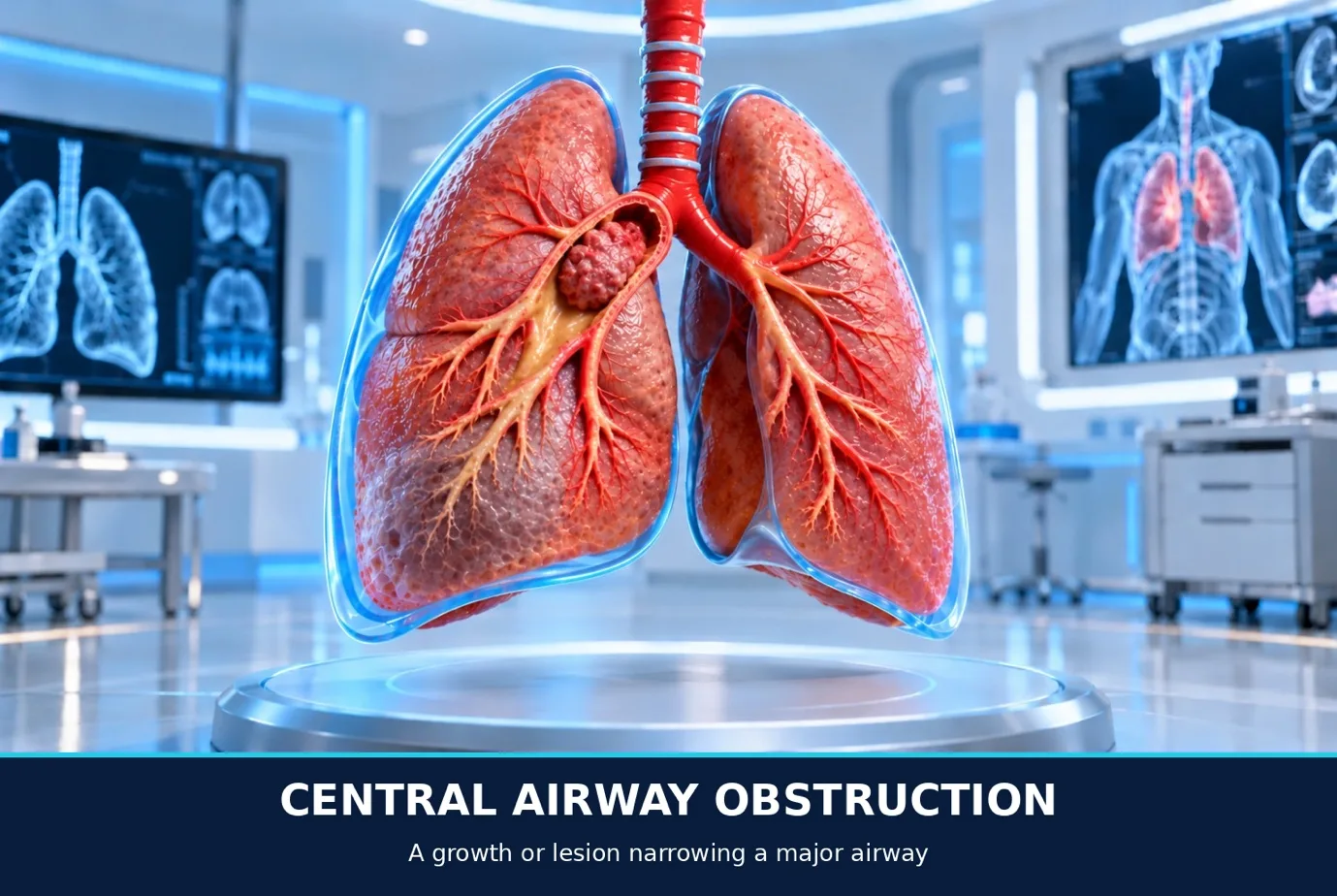
What is Airway Obstruction?
Stridor is a high-pitched, noisy sound heard while breathing, usually due to narrowing of the larynx, trachea (windpipe) or main bronchi. Central airway obstruction can significantly limit airflow.
Causes include scarring after a breathing tube or tracheostomy, tumours inside or pressing on the airway, inhaled foreign bodies and infections such as TB. Interventional pulmonology offers several minimally invasive options to restore the airway.
Common symptoms
- Noisy, high-pitched breathing (stridor)
- Breathlessness that does not respond to inhalers
- Wheeze heard over the neck or one side of the chest
- Difficulty clearing secretions and recurrent infections
Possible causes & risk factors
- Post-intubation or post-tracheostomy tracheal stenosis
- Tumours of the airway or compression from nearby masses
- Endobronchial tuberculosis
- Inhaled foreign bodies
- Tracheobronchomalacia (weakness of the airway wall)
When should you consult a pulmonologist?
- Noisy breathing, particularly after a past ICU stay with a breathing tube
- Breathlessness not explained by asthma or COPD
- Suspected inhaled foreign body — seek urgent care
Diagnostic investigations
Your evaluation is tailored to your symptoms and history. It may include:
- CT scan of the neck and chest with airway reconstruction
- Spirometry flow-volume loops
- Flexible bronchoscopy
Available treatment approaches
- Bronchoscopic balloon dilatation
- Airway stenting
- Tumour debulking with cryotherapy or other techniques
- Foreign body removal
- Rigid bronchoscopy for selected complex cases
- Referral for surgical airway reconstruction when appropriate
Treatment is individualised. The options above are general information; your doctor will recommend what is appropriate for you after assessment. Outcomes vary from person to person.
Frequently asked questions
Many cases can be managed with bronchoscopic procedures. The best approach depends on the cause, length and location of the narrowing, and on equipment availability and clinical suitability.